Stop chasing high returns only: It was through EagleTrader that I truly understood what consistent trading means

In trading, the last thing in short supply is “geniuses.”
You catch one directional move, go all in with heavy size, and your assets multiply several times within a week.
Many people have had this kind of highlight moment, but after the highlight, 90% of people give back all their profits along with their principal in the next one or two big swings.
Profits are random; losses are inevitable. Retail trader Lao Liu was just such a technically skilled expert before he came to EagleTrader.
He traded as a retail trader for four years, switched through countless strategies, and blew up three live accounts.
Until three months ago, when he joined our prop firm evaluation for larger capital, passed the account challenge, and received consecutive profit splits, he sat in front of the computer and said: “For the past four years I thought I was trading, but in fact I was just betting on luck in a legal casino.
Real trading is called ‘consistency.’
And only the rules of prop trading can engrave these three words deep into a trader’s bones.”
Why do many technically solid independent traders still fail to break through the profit ceiling? Today we won’t talk about anything vague; we’ll only discuss an important trading proposition—consistency—and how prop trading becomes the best solution to this proposition.
The biggest enemy of trading consistency: “flexible risk control”
Many independent traders always feel that consistency is difficult because their skills are insufficient.
In fact, the biggest fatal weakness of retail traders is the “flexibility” of risk control rules.
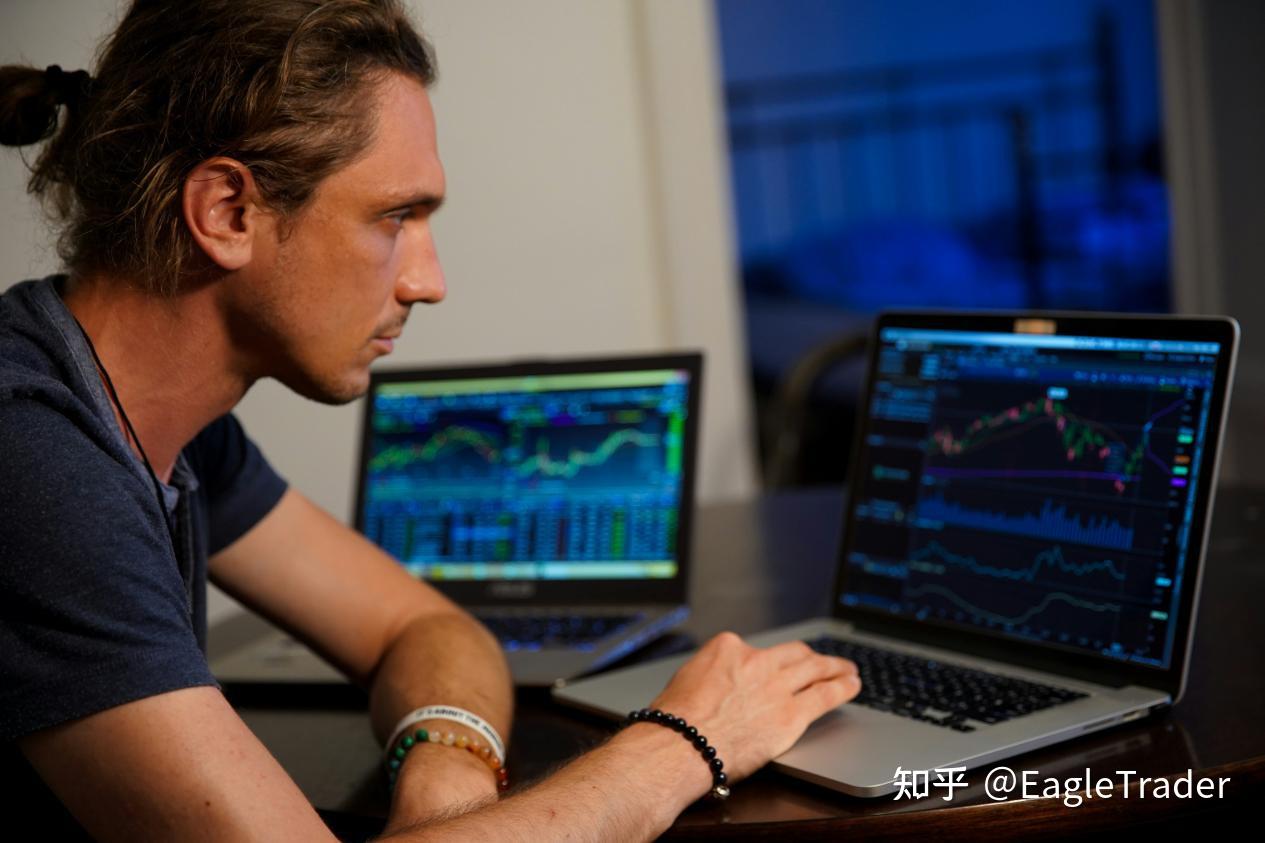
In personal live trading, you also know about stop-losses, but human weakness cannot withstand tests: after three consecutive losses, your mindset becomes unbalanced, you directly cancel the stop-loss manually, and start holding losing positions.
When you see the market rebound sharply, in order to recover losses, you instantly increase your position threefold, calling it “adding on the right side,” and then one wave blows up the account.
When managing your own money, in the face of market temptation and fear, your rules will always compromise to soothe your emotions.
Human gambling nature is inherently opposed to “consistency.”
How does prop trading force you to learn “consistency” through rules?
True “consistent trading” is essentially a boring, assembly-line-like risk management process.
It requires you, whether in an environment of extreme greed or extreme fear, to stably and repeatedly execute the same profit model.
This is exactly the underlying logic of the prop firm (Prop Firm) evaluation system.
Take EagleTrader as an example. It is not looking for speculators who want to “double an account with one trade,” but rather uses two rounds of risk-control red lines to force you to build muscle memory:
Strict risk-control red lines: the maximum daily drawdown cannot exceed 5%, and the maximum total account drawdown cannot exceed 10%.
In personal live trading, the price of breaking the rules is “blowing up to zero”; in a prop evaluation, the system acts as a cold “electronic risk-control officer.”
Once the red line is touched, liquidation happens immediately.
It uses a low-threshold cost to forcibly cut off the luck-seeking and gambling instincts in your human nature.
No maximum time limit: EagleTrader evaluations have no maximum trading time limit, with a minimum of only 4 days.
This sends a signal to the market: we don’t need you to win it all in one battle; we need to see whether your win rate and profit-loss ratio can still maintain a standard symmetry after the time period is extended.
When Lao Liu was forced to lock the profit-loss ratio of every trade above 2:1, strictly control single-trade losses within 0.5%, and immediately shut down the computer once the day’s loss reached 2%, he found that he was no longer a gambler but a qualified risk manager.
Why is prop trading the stage for excellent traders?
Once consistency is clarified, you will realize that the benefits of the prop trading model for traders are absolutely not just as simple as “providing capital”; it is all-round professional empowerment:
Untying “capital anxiety”: why can’t retail traders hold their positions? Because the tens of thousands in their hands are their hard-earned money and living expenses.
This leads to wanting to run after making a little profit and wanting to hold on after taking a little loss.
Under the prop model, however, trading is mainly done with simulated capital, and the profit splits obtained are real-capital incentives provided by the platform; traders bear no risk of loss.
When you are not afraid of losing your own money, your technical actions can truly remain undistorted, and your consistency strategy can be perfectly implemented.
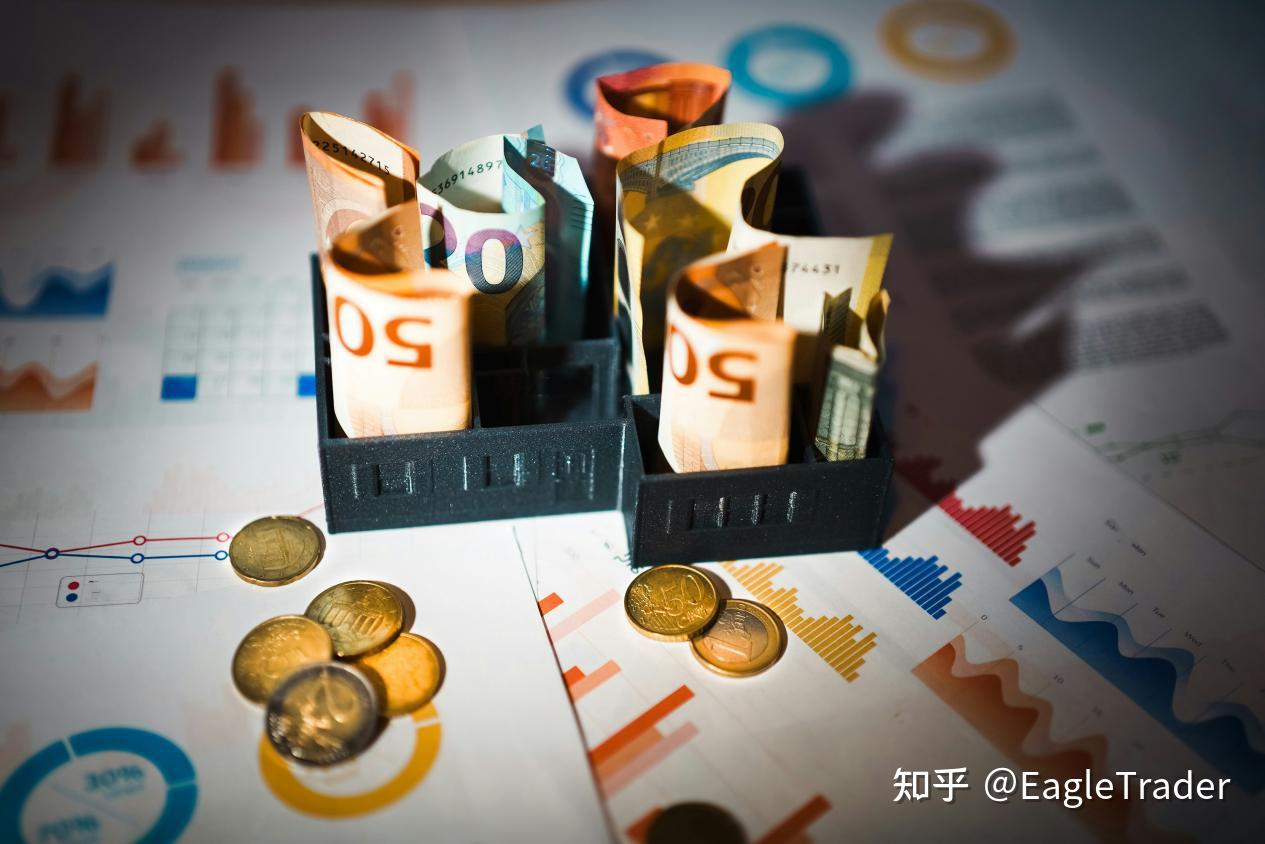
Large capital size amplifies the tiny premium of “consistency”: many retail traders look down on a 2% swing profit, because their principal is only 10,000 yuan, and 2% is only 200 yuan—not even enough for a meal—so they are forced to pursue high-risk, high-leverage trading.
But what if it is under the USD 200,000 large account provided by EagleTrader? Even if you only rely on a consistency strategy to steadily earn a tiny premium of 2%, the absolute return will be extremely astonishing, and you can also directly take away an ultra-high profit split of 80%-90%.
The leap from retail thinking to “professional fund manager”: at EagleTrader, you are not fighting alone.
Excellent traders with sustained and stable performance will obtain a 90% capital-scale profit split ratio through the “雄鹰计划”.
This is equivalent to paving a systematic advancement path for you from an independent retail trader straight to the pinnacle of a professional trader.
For a true professional trader, trading is never a win-or-lose gamble, but a long-term career about probability and risk control.
Without a rigid risk-control bottom line and scientific capital management, even the most refined skills can hardly go far in a volatile market.
The original intention behind EagleTrader's proprietary trader assessment mechanism is not to set thresholds, but to build a standardized risk management evaluation platform.
We are committed to helping outstanding local independent traders verify their consistent strategies in a rigorous simulated environment without the risk of personal assets being wiped out, and ultimately transition to the professional trader stage.
Ready to take on EagleTrader Max?
No upfront evaluation stage. Trade immediately once funded, with up to 90% profit split.