Footprint Order Flow in Practice: 3 Types of Key Price Levels to Help You Filter Out Blind Entries
Order Flow is like a magnifying glass for traders observing the market.
It can help us see the real buying and selling behavior behind the candlesticks, but what is truly valuable is not observing a single order flow signal in isolation, but knowing where to focus observation.
In actual trading, key support and resistance zones (Support & Resistance, S&R) are often exactly the areas where order flow deserves the most attention.
In this issue of EagleTrader strategy sharing, starting from the Footprint chart, we will outline several types of key order flow price levels worth close attention, and further break down a trading approach that combines support and resistance with order flow signals.
磁吸价位:哪些位置更容易出现反转?
大多数交易者都熟悉传统的支撑阻力,例如历史高点和低点。
但Footprint图表还能帮助我们找到一些普通K线图不容易直接看到的“隐性价位”。
这些位置往往会对价格产生较强吸引,也可能成为未来的重要支撑与阻力。
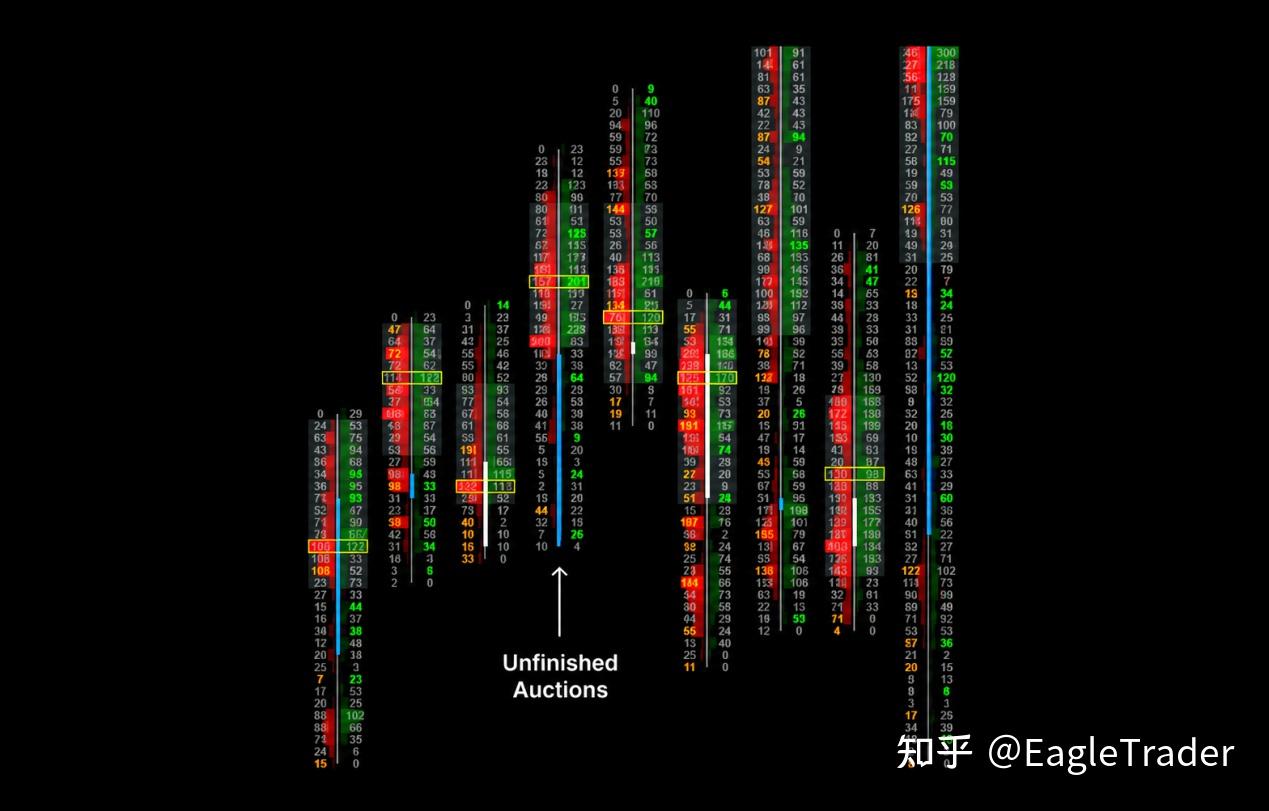
1. Unfinished Auction
Assume the market is rising rapidly. In Footprint, if at the high price level of the highest candlestick there are still trades on both the Bid and Ask sides, for example: Bid 10 × Ask 4
Under normal circumstances, at the extreme point of a K-line, the volume on one side should usually approach 0.
如果最高点或最低点两侧依然都有成交,就形成了所谓的 Unfinished Auction。
This means that the auction process at this price level has not completely ended, so the price will often return to this area later for testing. Such positions can usually serve as:
Potential take-profit target;
Important future support or resistance zone.
2. LVN and untested VPOC
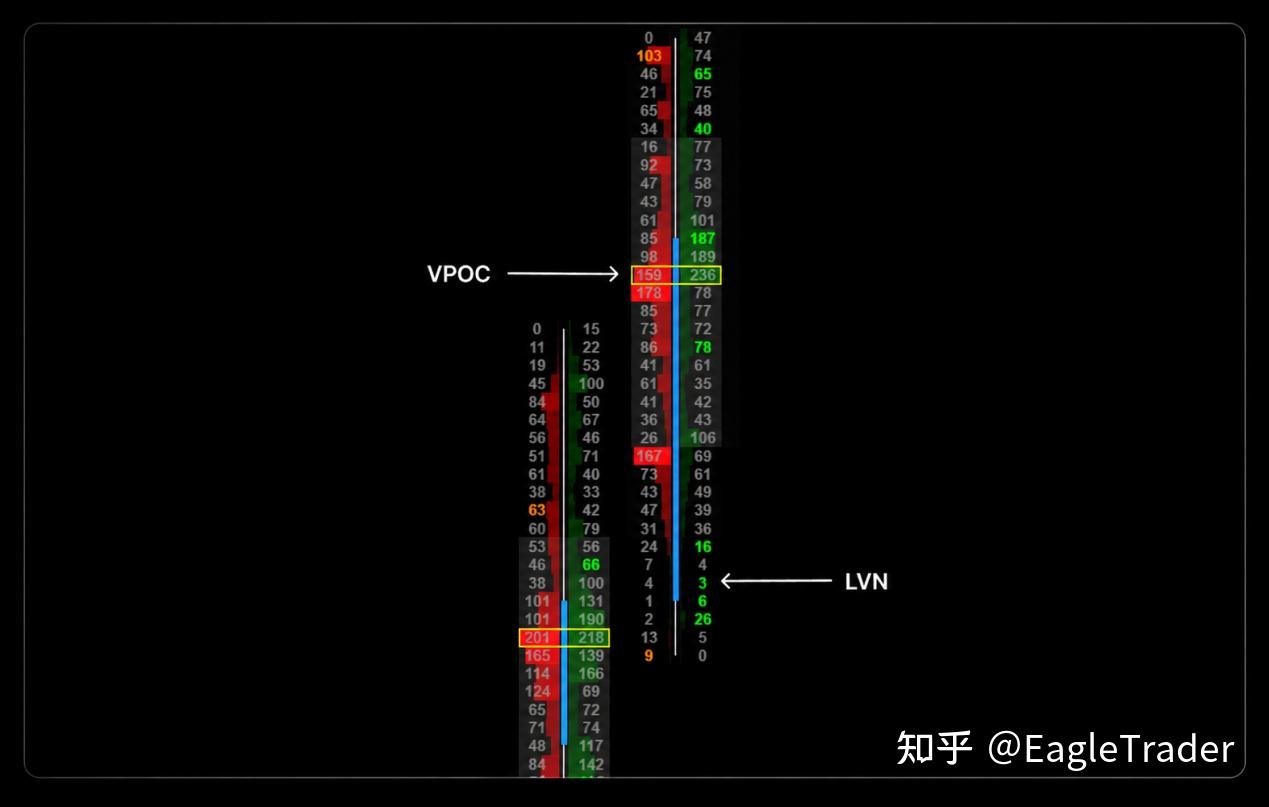
LVN (Low Volume Node, low-volume node) LVN is a price area with significantly low volume; on Footprint, it usually looks like a volume “void” or a position close to 0.
This means the price had moved quickly through this area without sufficient trading activity forming.
When price later returns to an untested LVN, two situations usually occur: either it quickly passes through, or it bounces or pulls back very precisely.
Therefore, untested LVNs are often price areas worthy of close attention.
VPOC (Volume Point of Control) VPOC is the specific price level with the highest volume within a certain candlestick or trading session.
If a VPOC forms and is never retested, it often becomes an important attraction area for future price and may also form strong support or resistance.
A common rule of thumb is: the more multiple untested VPOCs are concentrated in a similar area, the more important that area usually is.
3. Zero Prints / Single Prints inside Footprint
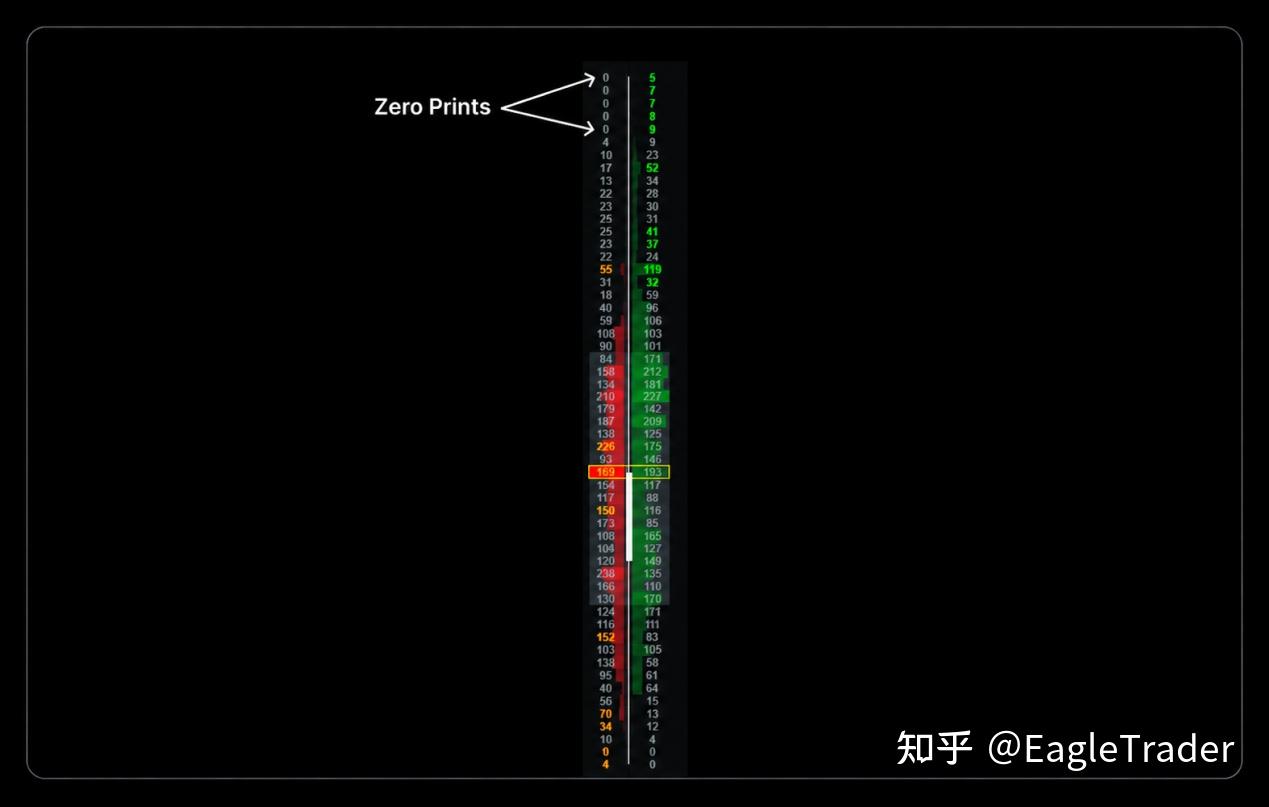
Sometimes, you will see a “0” inside the candlestick, rather than at the highest or lowest point. This usually happens in very aggressive, fast-moving market conditions.
例如,大量主动买盘迅速向上扫过流动性,价格涨得太快,以至于 Bid 一侧来不及形成有效成交,于是 Footprint 内部留下一个 0。
This structure is usually called: Zero Print or Single Print. It can be understood as a “trading gap” left behind during rapid price movement.
由于价格曾快速穿过该区域,市场之后经常会重新回来测试并填补这一位置,随后再继续原有趋势。因此,这类区域非常适合用来观察趋势延续型入场机会。
Combining Market Environment and Order Flow: Trading
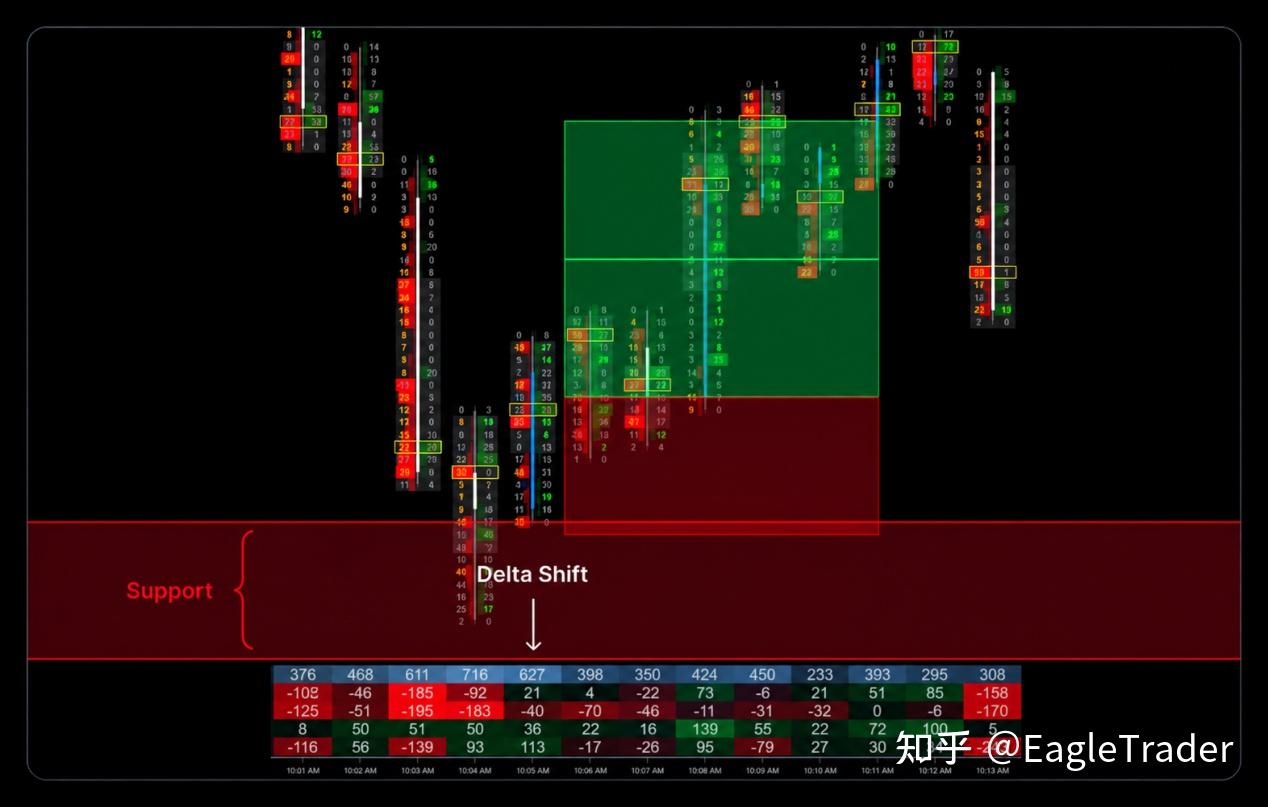
After understanding the key price levels, the next step is to combine these levels with order flow signals. Below, we use a long trade (LONG) as an example; the short-side logic can be understood in reverse.
1. Basic Environment
Price first needs to reach a clear and effective support/resistance zone. For example: a daily support level; an untested LVN from the previous trading day; or another important support zone.
2. Delta undergoes a shift
Focus on observing whether Delta shows a significant change; ideally, it turns from negative to positive. This indicates that the active selling that previously drove prices down is weakening, while active buying is beginning to gradually gain the upper hand.
3. Candlestick structure
Want to see a bearish candlestick enter the support zone, followed immediately by a bullish reversal candlestick. That is: price first declines into the key zone, then quickly shows a reaction in the opposite direction.
4. VPOC Position
对于理想的多头结构,反转K线最好能够:收盘在自身VPOC上方。这一点非常重要。因为这代表买方不仅进入了市场,而且成功将价格推到该K线成交最密集区域之上。
5. Entry
当反转K线收盘并满足上述条件后,可以考虑执行交易。比较理想的入场位置是:反转K线VPOC上方。
6. Stop Loss
Stop loss can be set: below a key support zone; or, if the support zone is wide, below the low of the reversal candlestick.
7. Take Profit
Take profit can use two approaches.
Approach A: Fixed risk-reward
ratio, for example 2:1 or 3:1.
Approach B: Dynamic target
Set targets based on key “magnetic price levels” in the trading direction, for example: unfinished auction; untested VPOC; Zero Print.
These levels can all serve as potential take-profit references.
5 Important Principles for Order Flow Traders
1. Respect higher timeframes
If you trade a 1-minute chart, you should also observe order flow and market structure on at least the 15-minute or 30-minute timeframe.
This helps you better understand the broader environment in which the current signal occurs.
2. Be wary of range-bound markets
When the market continues to move sideways and lacks a clear trend, some order flow signals, such as large Bid or Absorption, often become less reliable.
3. Distinguish aggressive trades from price reaction
The market is always seeking liquidity and balance. If a very large aggressive order appears but fails to push price in the expected direction, then that order has likely already been absorbed by the counterparty.
At this point, price may instead move in the opposite direction.
4. Market location matters more than a single signal
Even if a very beautiful order flow structure appears on Footprint, if it occurs at a location with no support/resistance significance, its reference value remains limited. Location is always important.
5. Do not look for so-called “guaranteed-win signals”
Footprint can show internal market transactions more clearly, but trading is still a matter of probability. Any Setup can fail.
Therefore, when large funds in the market sweep local liquidity, setting a reasonable stop loss remains the most important part of trading risk control.
Order flow cannot make traders completely avoid losses. But it can help us more clearly understand what is happening inside the market and reduce blind entries lacking a basis.
For EagleTrader traders, the true value of Footprint is not in finding a “100% effective” signal, but in using the mutual confirmation among order flow, price location, and market structure to give every trading judgment a clearer basis.
This article is only for EagleTrader trading strategy sharing and market analysis and does not constitute any investment advice.
Financial markets involve risk; please trade cautiously according to your own circumstances.
Ready to take on EagleTrader Max?
No upfront evaluation stage. Trade immediately once funded, with up to 90% profit split.